

The Kids Food Market


The Kids Food Market
The Children’s food and beverage market has experienced a revolution reinforced by the Covid19 crisis. In the 2010’s, most of the children’s food marketed on TV, advertisements and supermarkets were in fact of poor nutritional quality (high sugar rate, preservatives etc.).
With the environmental and health concerns increasing these past few years and the crisis, consumers are more and more claiming for nutritional and healthy foods, especially when it comes to their children.
An overview about the children’s food market shares and sales
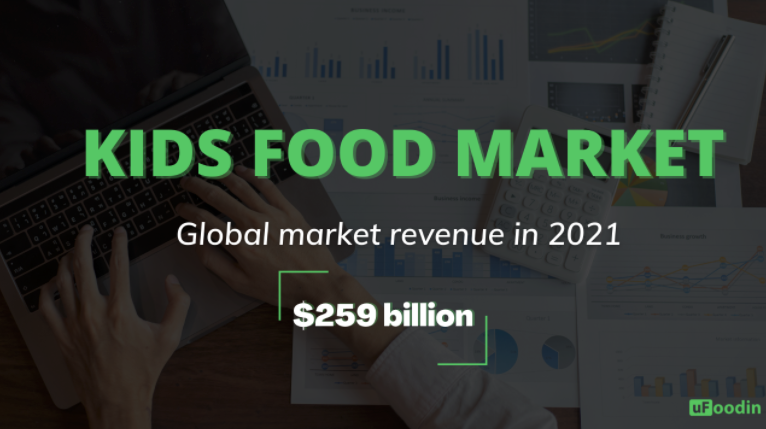
The global annual revenue of this industry in 2021 is around $259.731m and the first consuming region is Asia with China at the first position ($75.345m) followed by India and Japan.
The market is forecasted to grow by 7.27% annually until 2026 to reach $368.887m.
The global average volume of baby food per person is expected to be 4.3kg in 2021.
Organic and natural kids’ foods, especially snacks have grown around 14% since 2015.
US Focus :
In the US, weekly household grocery spending in 2020 was around $160.35 with a child while it was around $106.64 without a kid. And in 2020, 75% of the American parents surveyed asserted they didn’t use baby food.
Europe Focus :
In Europe, the market revenue growth of children’s foods was around 3.7%
The biggest exporters in Europe are Irland, the UK, Germany, the Netherlands and France.



The 3 leaders on the global kids’ food market : Nestlé, Johnson & Johnson, Danone
Current Trends about consumer behavior for the children’s food market
With the Covid-19, consumers’ fear of eating artificial and harmful ingredients has increased.
Especially for kids, parents are now looking for “free-from” products such as vegan or organic food*.
Nutritional benefits as the main driver
Children’s food has become a diverse market with many options for the consumers. While before children influenced a lot the purchasing of a product (mainly because of its attractive packaging, a mascot seen on TV etc.), now brands differentiate themselves by claiming health and nutritional claims. (Danone for eg.) The most popular foods are the ones which assert nutrition or immunity boosting such as “added vitamins” or “high irons”.
For this reason, food allergies are a promising sector and R&D fish tank for brands. Parents favorise formulas free from risky ingredients because they make the connection between the food ingested by their kids and their general health.
Transparency on the supply chain
Consumers request the brands more transparency whether it is on the product’s formula or its functionality.
Many parents around the world claim the “farm to fork” movement and brands understood this well. Leaders like Nestlé, Danone or Johnson & Johnson and many others created programs to put the light on the farmers producing the milk, vegetables or other raw ingredients used in the children’s foods.
The product functionality, especially its packaging is a key driver too for the customers. 40% of the parents surveyed internationally admitted they paid attention to choose an eco-friendly packaging before purchasing a product.
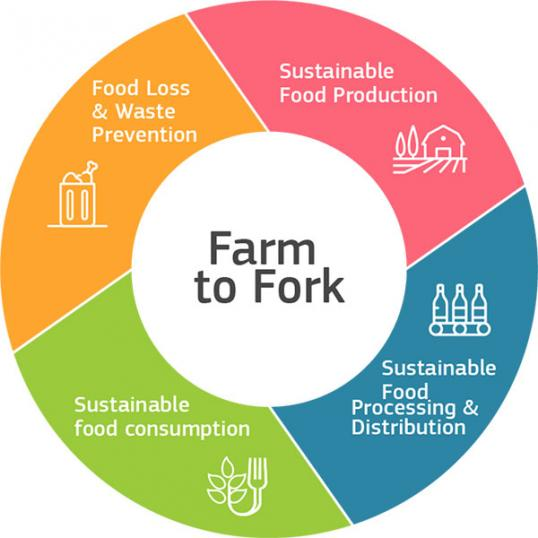
Scheme of the “Farm to Fork” strategy initiated with the European Green Deal
Forecasted trends
Baby milk and baby wet meals are the most purchased categories of children’s foods and they are forecasted to grow intensively in the next few years thanks to innovation. The “premiumisation” trend and the use of fresh ingredients challenge the R&D because parents are looking for long-life products but without preservatives or additives.
Supermarkets and Hypermarkets are still the favorite channels for consumers to buy healthy and organic kids’ products but they are also willing to buy small or private labels and local ones. So it’s predictable that supermarkets will extend their shelves for these products to the detriment of bad formula sweets, cookies and snacks from global brands.
*You can find our market’s states about plant-based and organic foods on our “News” Page.
Sources :
Market shares and sales : Statista, 07.2021
Trends and consumer behavior : Marketline, 2021
uFoodin Team

Top 10 Organic Food Importing Countries
The organic food market has witnessed explosive growth over the last decade, driven by increasing consumer awareness about health, sustainability, and ethical sourcing. Valued at

Top 10 Alcohol-Free Beverage Importing Countries
The alcohol-free beverage market has emerged as a global phenomenon, driven by health-conscious consumers, shifting cultural norms, and evolving preferences for diverse drink options. Valued







Top 10 Organic Food Importing Countries
The organic food market has witnessed explosive growth over the last decade, driven by increasing consumer awareness about health, sustainability, and ethical sourcing. Valued at
Top 10 Alcohol-Free Beverage Importing Countries
The alcohol-free beverage market has emerged as a global phenomenon, driven by health-conscious consumers, shifting cultural norms, and evolving preferences for diverse drink options. Valued

Top 10 Canned Food Importing Countries
Canned food plays a pivotal role in the global food industry, providing essential solutions for food preservation, convenience, and affordability. With a market valued at
Top 10 Vegetable Importing Countries
Vegetables are an integral part of global trade, supporting both essential nutrition and diverse culinary traditions. In 2023, the global vegetable import market was valued

Top 10 Fruit Importing Countries
Fruits are an essential part of global trade, reflecting both cultural preferences and economic opportunities. In 2023, the global fruit import market was valued at

Top 10 Seafood Importing Countries
Seafood remains one of the most traded commodities globally, with annual trade exceeding $160 billion in 2023. The Top 10 seafood-importing countries account for over

Functional Always active
Preferences
Statistics
Marketing
Functional Always active
Preferences
Statistics
Marketing
Report
Block Member?
Please confirm you want to block this member.
You will no longer be able to:
- See blocked member's posts
- Mention this member in posts
- Invite this member to groups
- Message this member
- Add this member as a connection
Please note: This action will also remove this member from your connections and send a report to the site admin. Please allow a few minutes for this process to complete.
Responses